01
Direction
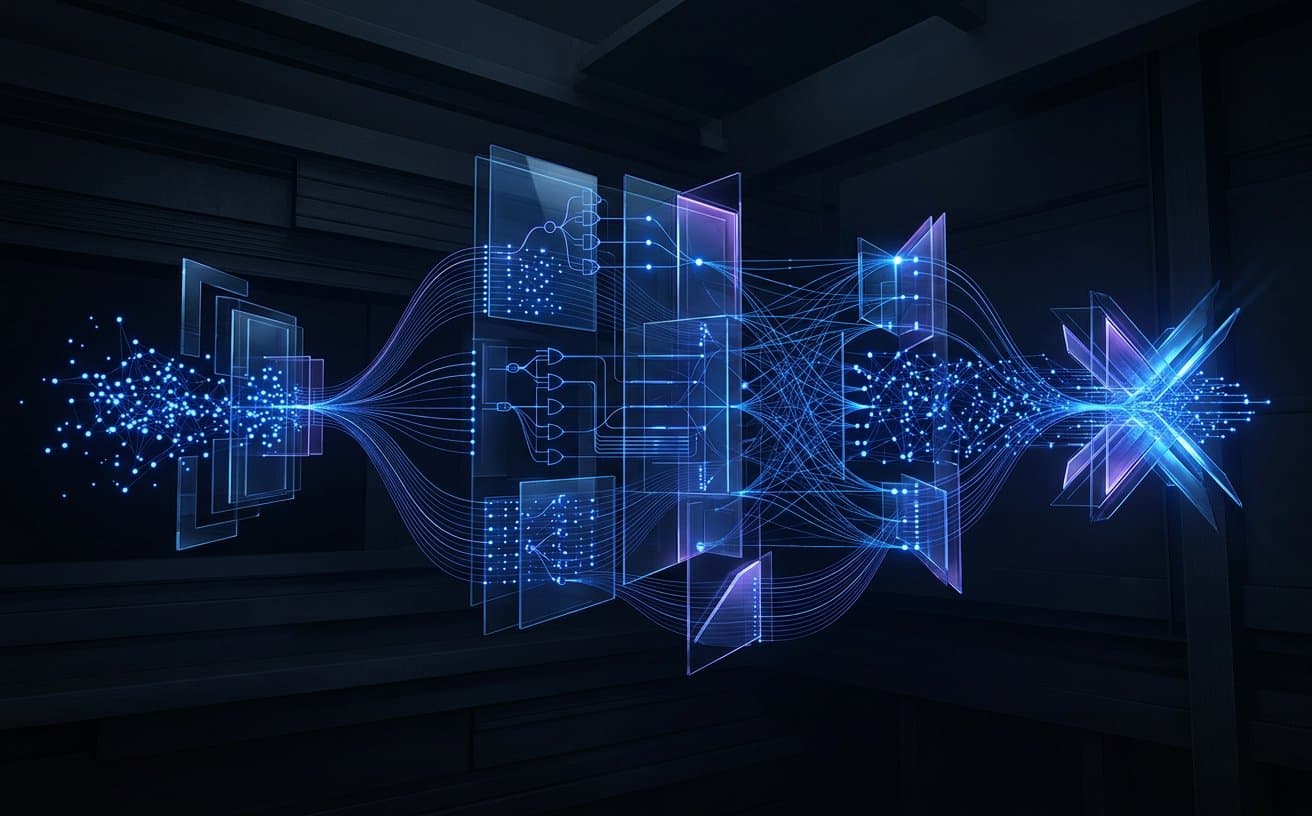
Responsive glass frames represent user-facing moments while luminous pathways reveal the supporting flow. A brighter node marks places where human judgement remains essential.
05 / Digital Systems
A digital-experience study where the visible interface and the workflow behind it follow the same clear logic.
 Self-initiated direction study
Creative premise
This concept maps every visible action to a clear system response. Connections are shown only when they help a person understand progress, responsibility, or the next decision.
From question to direction
Responsive glass frames represent user-facing moments while luminous pathways reveal the supporting flow. A brighter node marks places where human judgement remains essential.
The proposed structure separates triggers, automated steps, review points, and outcomes. Components reuse the same status language so the experience stays coherent from small screen to wide workspace.
Feedback is immediate but restrained. The system communicates what happened, what needs attention, and how to recover—without exposing technical complexity that does not help the user.
Frame study
These crops examine composition and material within the same original concept artwork; they are not separate delivered assets.
What this concept explores
One information model across interface and workflow
Visible human checkpoints inside connected processes
Responsive components with consistent status language
Graceful feedback for progress, exceptions, and recovery
Connected craft
Build an original direction
Share the audience, context, and rough idea. We will identify the right mix of story, design, motion, and technology from there.